

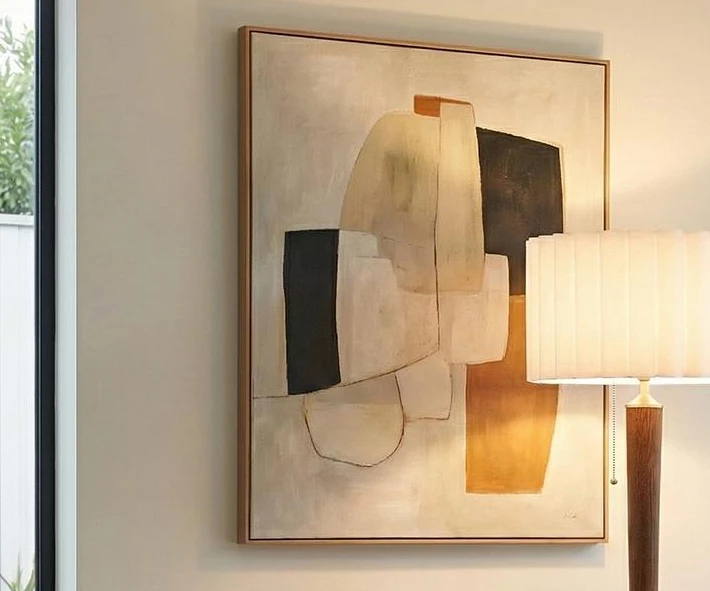
There is something timeless about the design era that shaped the mid-20th century. Clean lines, warm wood tones, tapered legs, and organic forms defined a generation of furniture and lighting that still resonates powerfully with homeowners and interior designers across the United States today. Mid-century modern floor lamps have moved well beyond nostalgia. They are now a central part of how Americans furnish and light their homes in 2026, combining functional ambient lighting with furniture-grade craftsmanship that holds its own in any room.
Also Read: Popularity of Interactive Event Experiences in Las Vegas
Whether you are refreshing a living room in Austin, redesigning a bedroom in Portland, or sourcing lighting for a commercial hospitality project in New York, mid-century modern floor lamps offer an aesthetic versatility that few other lamp styles can match. This guide covers everything that matters: style definitions, material quality, bulb compatibility, room placement, real product comparisons, and why Nova of California continues to set the benchmark for this category in the American market.
Defining Mid-Century Modern Floor Lamps
Mid-century modern, often abbreviated as MCM, refers to a design movement that flourished roughly between the 1940s and 1970s. The movement was a reaction to overly ornate Victorian and early 20th-century design, emphasizing simplicity, function, and a connection between indoor living and the natural world. In terms of lighting, this translated into floor lamps with slender metal stems, solid walnut or teak wood bases, cone-shaped or globe shades, and a deliberate absence of decorative excess.
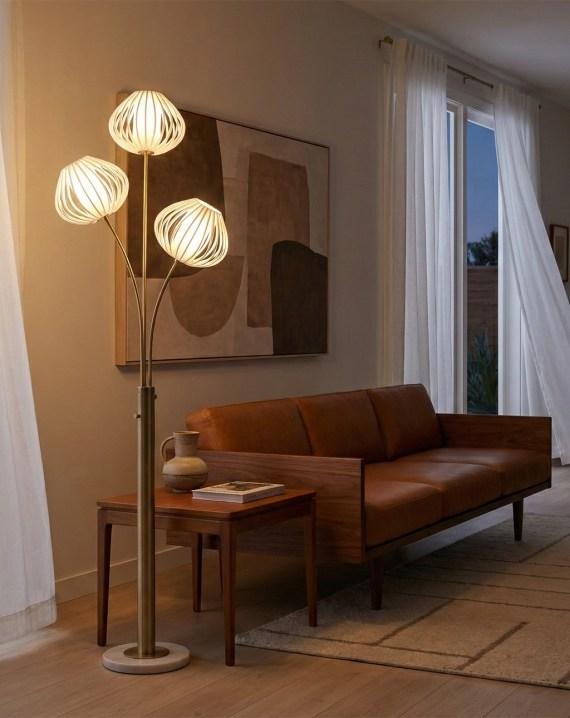
A mid-century modern floor lamp is not merely a lamp that looks old. It is a product built around specific proportions, material relationships, and light quality principles. The shade angle matters. The base weight matters. The finish on the metal hardware matters. These lamps are designed to create a warm, layered light source that works alongside natural daylight and competes favorably with recessed ceiling fixtures.
Why Mid-Century Modern Lighting Remains Relevant in 2026
Design trends cycle, but mid-century modern has proven unusually durable. According to interior design surveys conducted throughout the early 2020s, MCM furniture and lighting consistently ranks among the top three most searched residential styles in the United States. The reasons are practical as much as aesthetic.
MCM floor lamps tend to be proportionally balanced, meaning they integrate well with a wide range of other furniture styles including Scandinavian minimalism, organic modern, and even transitional interiors. A well-made tripod brass floor lamp from Nova of California placed in a room with a linen sofa, a wool area rug, and a live-edge coffee table will feel intentional rather than mismatched. That cross-style compatibility is rare in lighting design.
The 2026 interior design landscape also reflects a broader consumer shift toward quality over quantity. People are buying fewer pieces of furniture and lighting, but they are willing to spend more on those pieces when they are well-made, sustainably sourced, and visually enduring. Mid-century modern floor lamps fit this profile almost perfectly. They are not trend-dependent, they photograph well for home listing platforms, and they retain resale value longer than fast-furniture alternatives.
The Role of Ambient Lighting in Modern Interiors
One factor that keeps MCM floor lamps in demand is the growing preference for layered lighting design. Recessed ceiling lights create flat, uniform illumination that many homeowners now find cold and uninviting. Interior designers across the US are increasingly specifying table lamps, floor lamps, and sconces to build warm, dimensional light environments. Mid-century modern floor lamps, with their warm-toned shades and often directional output, are especially well suited for this layered lighting approach.
A single arc floor lamp positioned over a reading chair, paired with a low console table lamp across the room, immediately creates the kind of intimate evening atmosphere that no ceiling fixture can replicate. This is not merely a design preference. Research into residential lighting behavior consistently shows that occupants report higher comfort and satisfaction in rooms lit primarily by ambient and accent sources rather than overhead fixtures alone.
Key Design Features to Evaluate Before Buying
Not all mid-century modern floor lamps are created equally. The market in 2026 includes options ranging from mass-produced imports at entry-level price points to handcrafted American-made pieces that represent genuine heirloom quality. Knowing what to evaluate before purchasing prevents costly mistakes.
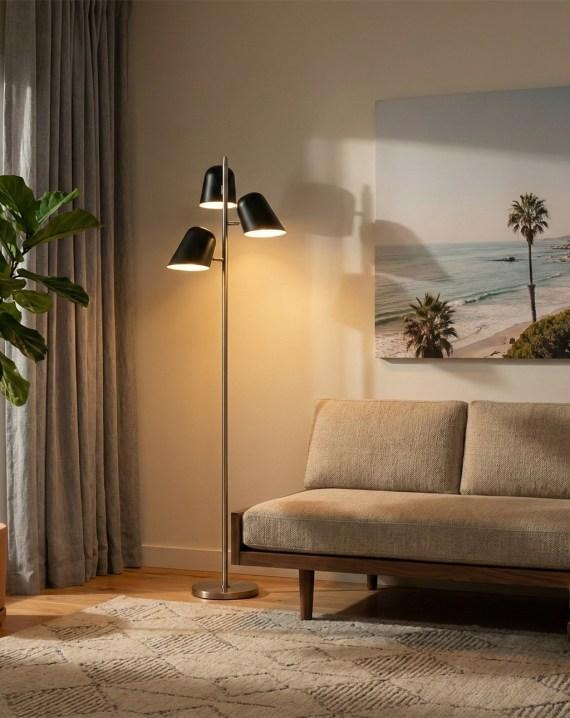
Base Material and Weight
The base of a floor lamp determines its stability and its visual presence. Solid walnut wood bases feel substantial and develop character over time as the grain takes on a patina. Cast iron bases, often powder-coated in black or white, provide industrial durability. Marble bases offer a luxurious, grounded aesthetic that pairs beautifully with brass hardware. Avoid lamps with bases made from MDF or particleboard, which are prone to moisture damage and will not hold up over years of use.
Stem and Hardware Finish
The stem is the vertical element that connects the base to the shade. In MCM floor lamps, stems are most commonly made from steel, brass, or aluminum. Finish quality varies enormously. Brushed brass that is electroplated over zinc will eventually peel. Solid brass hardware that is lacquered or waxed will last decades. Matte black powder-coat finishes are also popular and durable when applied over welded steel.
Shade Material and Light Diffusion
Shade quality directly affects light quality. Linen shades diffuse light warmly and evenly, creating the soft glow associated with high-quality residential lighting. Plastic shades, even when well-designed, tend to cast a slightly bluish or flat light that reads as inexpensive. Frosted glass shades are another premium option, particularly for globe and cone configurations where the shade is meant to be seen as much as used.
Switch Placement and Dimmer Compatibility
A floor lamp without a convenient switch placement becomes frustrating in daily use. Inline cord switches, foot switches, and remote-compatible designs each suit different use cases. For reading lamps and ambient sources, dimmer compatibility is essential. Most quality MCM floor lamps in 2026 are compatible with LED dimmer bulbs, but it is worth confirming this before purchasing, particularly for three-way socket designs.
Height and Shade Position
Standard floor lamp height runs between 58 and 72 inches. Arc lamps can extend considerably higher, sometimes reaching 80 to 84 inches at the arc peak. Shade position relative to seating height matters: for a reading lamp, the bottom of the shade should sit approximately at eye level when seated, around 40 to 42 inches from the floor. For torchiere-style uplighters, height matters less because the light output is directed upward.
Top Mid-Century Modern Floor Lamp Styles Compared
The following comparison table covers the five most popular MCM floor lamp configurations available to US buyers in 2026, evaluated across key criteria.
| Style | Best Room | Light Output | Typical Base | Price Range (USD) | Dimmer Compatible |
| Tripod Floor Lamp | Living Room, Bedroom | Directional, Warm | Walnut Wood or Brass | $150 – $650 | Usually Yes |
| Arc Floor Lamp | Sofa/Seating Areas | Overhead Ambient | Marble or Cast Iron | $200 – $900 | Usually Yes |
| Torchiere Floor Lamp | Open Living Spaces | Upward Ambient | Metal, Black or Brass | $100 – $450 | Varies |
| Drum Shade Floor Lamp | Bedroom, Office | Soft, Diffused | Walnut or Lacquered Wood | $180 – $700 | Usually Yes |
| Cone Shade Floor Lamp | Reading Nooks, Studies | Directional, Focused | Brass or Matte Black Steel | $130 – $500 | Usually Yes |
Nova of California: Brand Overview and Craftsmanship
Nova of California is one of the most respected lighting brands operating in the mid-century modern and contemporary residential categories within the United States. Founded with a focus on combining California design sensibility with accessible craftsmanship, the brand has built a catalog that spans floor lamps, table lamps, pendants, and wall sconces, all unified by a coherent design language rooted in MCM principles.
What distinguishes Nova of California from mass-market competitors is the level of material intentionality in their products. Their floor lamp collections consistently feature solid wood bases, hand-finished metal hardware, and shade materials selected for light quality rather than cost reduction. The brand also maintains a strong commitment to UL-listed electrical components, which matters for insurance purposes and long-term safety in residential and commercial installations.
Nova of California Tripod Series: A Closer Look
The Nova of California tripod floor lamp series represents one of the brand’s most enduring product families. Available in brushed brass and matte black finishes, with walnut wood leg options, these lamps sit in the 58 to 66 inch height range and accept standard E26 bulbs. The shade options include natural linen in off-white and charcoal, and the lamps ship pre-assembled in North America with minimal packaging waste.
For comparison, a similarly styled tripod lamp from a discount import brand will typically use hollow MDF legs rather than solid wood, a lower-gauge steel bracket, and a synthetic fabric shade that yellows within 12 to 18 months of regular use. The Nova of California equivalent in the same price class uses kiln-dried wood, welded steel hardware, and a cotton-linen blend shade that retains its color and texture for the life of the product.
Arc Lamp Collection from Nova of California
The arc floor lamp category is one of the most competitive in the MCM lighting market, and Nova of California positions its offerings thoughtfully here. Their arc lamps feature a counter-weighted marble base that prevents tipping even when the arm is fully extended, a key safety consideration for households with children or pets. The arc stem is available in brass and black, with a maximum arm extension of approximately 72 inches, making it suitable for positioning over large sectional sofas.
Room-by-Room Placement Guide for Mid-Century Modern Floor Lamps
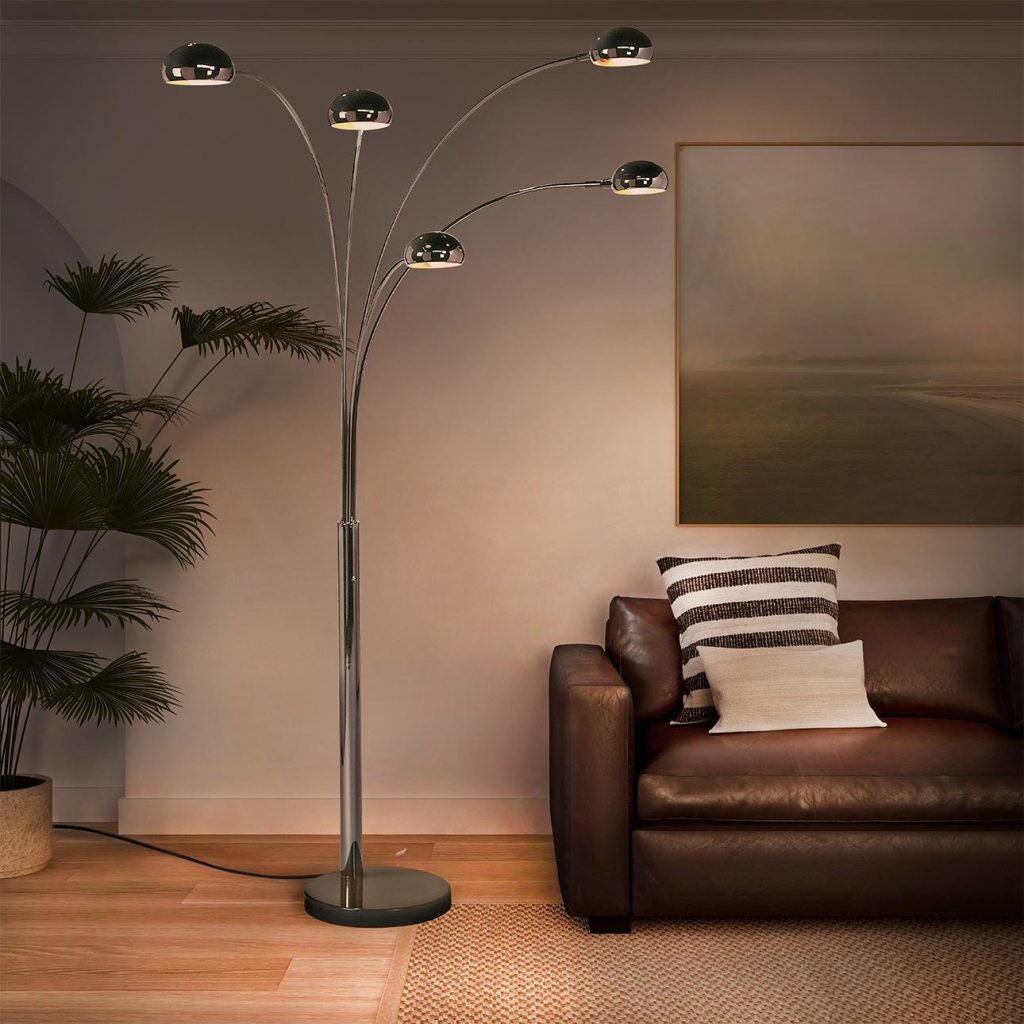
Living Room
The living room is the most common setting for mid-century modern floor lamps, and for good reason. An arc floor lamp positioned over one end of a sectional sofa creates an intimate reading zone within a larger open-plan space. A pair of matching tripod lamps flanking a media console adds symmetry and fills the vertical space that often feels empty on either side of a television wall. For living rooms with high ceilings, a torchiere floor lamp in a corner can bounce a significant volume of warm light off the ceiling, softening the entire room without the harshness of a central overhead fixture.
Bedroom
In bedrooms, floor lamps serve a different function than in living areas. The goal is typically softer, more directional light that supports reading without flooding the entire room. A tripod lamp with a drum shade placed beside a reading chair in a master bedroom corner is a classic MCM configuration. For nightstand-replacement applications in smaller rooms, a slim cone-shade floor lamp can substitute for a table lamp while keeping the nightstand surface clear.
Home Office
Home office lighting requires a balance between task illumination and ambient warmth. A well-positioned cone-shade floor lamp or a swing-arm floor lamp brings adjustable directional light to a desk without the blue-tinted harshness of standard LED strip lighting. Nova of California arc floor lamps work particularly well in home offices when positioned to cast light over the shoulder of the primary working position, minimizing screen glare while maintaining adequate task brightness.
Dining Room and Open Plan Spaces
While pendant lighting is the dominant choice for dining tables, a single arc floor lamp or torchiere positioned in a dining room corner can add a secondary ambient layer that makes evening meals feel more intimate. In open-plan living and dining configurations, pairing a pendant over the table with a floor lamp in the adjacent seating zone helps delineate the two functional areas visually, even without physical partition walls.
Bulb Selection and Light Output for MCM Floor Lamps
The bulb you choose for a mid-century modern floor lamp significantly affects the aesthetic outcome. MCM lamps are designed around warm light, typically in the 2700K to 3000K color temperature range. Choosing a daylight or cool white bulb in the 4000K to 6500K range will fundamentally alter the warm amber character that makes MCM lighting so appealing.
LED vs. Incandescent for MCM Lamps
Traditional incandescent bulbs produce the warmest, most continuous spectrum light available, but their energy inefficiency has made them a marginal choice in 2026. LED technology has improved dramatically, and high-quality warm white LED bulbs in the 2700K range now come extremely close to replicating the color rendering of incandescent sources. Look for LEDs with a Color Rendering Index of 90 or above for the most accurate, flattering light output.
Edison Filament Bulbs in MCM Lamps
Edison-style filament bulbs remain popular for mid-century modern floor lamps, particularly in designs where the bulb is partially or fully visible. A globe-shaped G25 or G30 filament bulb in a tripod lamp with a semi-open shade creates a beautiful visual effect that is both functional and decorative. These are available in LED versions that consume a fraction of the energy of their vintage counterparts while maintaining the warm amber glow.
Price vs. Quality: What the Market Looks Like in 2026
The mid-century modern floor lamp market in the United States spans a wide price range, and understanding where quality thresholds occur helps buyers make well-informed decisions.
| Price Tier (USD) | Typical Quality Level | Base Material | Shade Material | Hardware | Expected Lifespan |
| $80 – $150 | Entry Level | MDF or thin metal | Synthetic fabric | Lightweight stamped | 2 – 4 years |
| $150 – $300 | Mid-Range | Engineered wood or solid metal | Polyester-linen blend | Welded or reinforced | 5 – 8 years |
| $300 – $600 | Upper Mid-Range | Solid wood or marble | Natural linen or cotton | Solid brass or steel | 10 – 15 years |
| $600 – $1,200+ | Premium / Heirloom | Solid hardwood or cast stone | Linen, glass, or custom | Solid brass, brushed | 20+ years |
Nova of California products predominantly occupy the upper mid-range and premium tiers, which positions them as a practical long-term investment rather than a disposable purchase. A $400 floor lamp that lasts 15 years is a significantly better economic proposition than a $120 lamp replaced every three years.
Real Example Comparison: Three Popular Models Side by Side
To make this practical, the following section compares three real floor lamp options across different price points that represent the MCM category in 2026. The comparison focuses on actual buyer-relevant factors rather than marketing claims.
Model A: Budget Tripod Floor Lamp from a Mass-Market Retailer (approx. $119)
A widely available option from a large furniture chain, this lamp features three steel legs in a faux-walnut printed finish, a synthetic shade in off-white, and an inline switch. The overall height is 60 inches. In hands-on assessments, the base feels lightweight and the shade seam is visible at certain angles. The lamp wobbles slightly when positioned on carpet due to the non-adjustable leg feet. Bulb compatibility is limited to 60W max incandescent, and the lamp is not rated for LED dimmer use. For rental apartments or temporary living situations, it is serviceable. For long-term home installations, it falls short on durability and light quality.
Model B: Mid-Range Arc Floor Lamp from an Online Specialty Retailer (approx. $289)
This option comes closer to the authentic MCM aesthetic with a weighted base, a matte black arc stem, and a white linen shade approximately 15 inches in diameter. The base weight is sufficient to prevent tipping in most configurations, and the shade material diffuses light warmly. The electrical components are UL-listed, and the lamp accepts both incandescent and LED bulbs up to 100W equivalent. The primary limitation is the arm reach, which at 58 inches is shorter than ideal for most sectional sofa configurations. At this price, it represents solid value.
Model C: Nova of California Tripod Floor Lamp with Walnut Base (approx. $449)
Nova of California positions this lamp at the upper mid-range, and the construction reflects that positioning. The base is solid kiln-dried walnut with a clear oil finish that brings out the natural grain. The legs are genuine solid wood, not veneer or printed finish. The hardware connecting the legs to the stem is solid brass, and the stem itself is steel with a brushed gold finish that complements the walnut base without competing with it. The shade is a natural linen blend in warm white, and the lamp is rated for LED dimmer use with an E26 socket that accepts bulbs up to 150W equivalent.
In direct comparison, the light output from the Nova of California lamp is noticeably warmer and more evenly diffused than either of the comparison models. The footprint of the tripod base is wider, providing greater stability on both hard floor and carpet surfaces. The overall lamp reads as a furniture-grade piece rather than an accessory, which affects how the room feels when the lamp is the primary light source in an evening setting.
How to Style Mid-Century Modern Floor Lamps with Existing Furniture
Pairing with Organic Modern Interiors
Organic modern interiors, which blend natural textures, neutral palettes, and biophilic design elements, pair extremely well with MCM floor lamps. A walnut-base tripod lamp beside a curved cream bouclé sofa, placed on a natural jute area rug, creates a cohesive warmth that feels both designed and lived-in. The key is matching wood tones: if your coffee table is light oak, consider a bleached or honey-finished walnut lamp base rather than a dark espresso finish.
Pairing with Scandinavian Minimalism
Scandinavian interior design shares significant DNA with mid-century modern, making the two styles highly compatible. In a Scandinavian-influenced space with white walls, pale wood floors, and low-profile furniture, a matte black tripod floor lamp with a white or light grey linen shade provides a visual anchor without overwhelming the restraint of the room. Brushed brass accents also work well in Scandinavian settings, adding warmth to an otherwise cool palette.
Pairing with Industrial and Loft Interiors
Industrial spaces with exposed brick, concrete floors, or steel beam ceilings benefit from MCM floor lamps that incorporate metal hardware prominently. A matte black arc floor lamp with a black cone shade bridges industrial and MCM aesthetics naturally. The clean geometry of MCM design prevents the space from feeling too raw, while the industrial setting prevents the lamp from feeling too polished.
Color Palette Guidance for MCM Floor Lamp Selection
For rooms with warm-dominant color palettes (terracotta, ochre, rust, warm beige): brass and walnut finishes strengthen the palette.
For rooms with cool-dominant palettes (grey, sage, navy, slate): matte black and bleached wood or white marble bases provide contrast without clashing.
For neutral rooms (white, off-white, greige): either brass or matte black works well; the lamp itself becomes a focal point.
Maintenance and Longevity of Mid-Century Modern Floor Lamps
A well-made mid-century modern floor lamp requires minimal maintenance, but a few practices extend the life and appearance of both the lamp and its shade considerably.
Wood Base Care
Solid wood bases should be dusted regularly with a dry microfiber cloth. Avoid silicone-based furniture sprays, which can build up a cloudy residue on oil-finished wood. Once or twice a year, applying a thin coat of furniture wax or natural oil (tung oil or danish oil) to a walnut base will keep the grain looking rich and prevent drying or cracking. If the base develops a scratch, light sanding with 220-grit sandpaper followed by re-oiling typically restores the finish without professional intervention.
Metal Hardware Care
Brushed brass hardware should be wiped with a damp cloth to remove fingerprints and dust. Avoid abrasive cleaners that will scratch the brushed texture. If the brass develops tarnish, a small amount of brass polish applied with a soft cloth and then buffed clean will restore the finish. Lacquered brass finishes require even less maintenance but should not be polished, as abrasives will remove the lacquer layer.
Shade Care
Linen and cotton shades should be dusted with a soft brush attachment on a vacuum cleaner. For spot cleaning, a lightly dampened cloth with gentle dish soap works for most stains. Avoid saturating fabric shades with water, as this can cause warping of the shade frame. Glass shades can be cleaned with standard glass cleaner applied to a cloth rather than sprayed directly onto the shade.
Frequently Asked Questions
| Question | Answer |
| What makes a floor lamp truly mid-century modern? | Authentic MCM floor lamps feature clean lines, minimal ornamentation, tapered or tripod bases, and warm-toned materials such as walnut wood, brass, and natural fabric shades. The design emphasizes proportion and function over decorative complexity. |
| Are mid-century modern floor lamps suitable for contemporary interiors? | Yes. MCM floor lamps are among the most versatile options available because their design language overlaps with several other popular styles including organic modern, Scandinavian minimalism, and transitional decor. They work in both traditional and contemporary room settings. |
| How tall should a floor lamp be for a standard living room? | Most floor lamps between 60 and 66 inches tall suit standard 8 to 9 foot ceiling heights well. Arc lamps can be taller. The shade should ideally sit at or near eye level when seated for reading applications. |
| What bulbs work best in mid-century modern floor lamps? | Warm white LED bulbs in the 2700K to 3000K color temperature range produce the most flattering MCM light character. For exposed-bulb or semi-visible configurations, Edison filament LED bulbs in G25 or ST19 shapes work beautifully. |
| Is Nova of California a US-based brand? | Nova of California is a California-based lighting brand that designs products with a focus on MCM and contemporary residential aesthetics. Their products are sold across the United States through retail and direct channels. |
| What is the difference between a torchiere and a tripod floor lamp? | A torchiere lamp features an upward-facing cone shade that directs light toward the ceiling for broad ambient illumination. A tripod lamp features a three-legged base with a downward or horizontally oriented shade for more directional, intimate light output. |
| How do I prevent a floor lamp from tipping? | Choose lamps with weighted or wide-footprint bases appropriate to their height. Arc lamps should have counter-weighted marble or cast-iron bases. On carpet, use rubber foot pads under the base legs. Keep lamp cords routed away from traffic areas. |
| Can mid-century modern floor lamps work in small spaces? | Yes. Slim tripod designs with a small footprint work well in smaller rooms. The vertical nature of floor lamps makes them efficient space users compared to table lamps, which require surface area. In small rooms, a single well-placed floor lamp often provides better light quality than multiple smaller sources. |
| What is the average price of a quality mid-century modern floor lamp in 2026? | Quality MCM floor lamps from reputable US brands typically range from $250 to $600. Entry-level options start around $100 but involve tradeoffs in material quality and longevity. Premium heirloom-grade lamps can exceed $800 to $1,200. |
| Are LED bulbs compatible with MCM floor lamp dimmers? | Most quality mid-century modern floor lamps in 2026 are compatible with dimmable LED bulbs, but compatibility depends on both the lamp’s dimmer switch type and the specific LED bulb. Look for LED bulbs labeled as dimmable and verify the lamp is wired for dimmer use before purchasing. |
Final Thoughts on Choosing the Right Mid-Century Modern Floor Lamp
Mid-century modern floor lamps occupy a unique position in the residential lighting market. They are functional, aesthetically enduring, and remarkably adaptable across interior styles. The category has grown significantly in the US over the past decade, driven by consumer appetite for quality craftsmanship, warm ambient lighting, and design that holds its value over time.
When evaluating options in 2026, the key variables are base material quality, hardware finish durability, shade light diffusion, and compatibility with modern LED dimmer technology. The difference between a $120 entry-level tripod lamp and a $450 solid walnut Nova of California equivalent is not merely aesthetic. It represents a fundamental difference in materials, construction standards, and the quality of light the lamp produces day after day.
Nova of California continues to stand out in this category because the brand approaches floor lamp design with the same seriousness that quality furniture makers bring to their work. The lamps are not accessories. They are fixtures in the truest sense, pieces that anchor a room, define its atmosphere, and contribute meaningfully to the daily experience of living in a thoughtfully designed space.
For homeowners, renters, interior designers, and hospitality buyers across the United States who want the authentic mid-century modern aesthetic with none of the compromise on quality, the combination of careful style selection, bulb matching, and brand confidence in a name like Nova of California is the clearest path to lighting that performs as well as it looks.


